The AIDS Crisis in Paradise
Today, my
brother, Father Gerhard Lagleder, and I are going off on a photo-safari, but
it’s different than the kind everyone knows from South Africa. We aren’t off to
photograph lions, elephants and giraffes although we do head off into
breath-taking scenery. The hills roll softly down into the banks of the Tugela
River. Palms perfect the picture of a paradise where, right now, a terrible war
is raging. We stand on a hill and look down into the valley. Gerhard says:
“Here, this is the valley of death, the AIDS pit. 90% of the population is
infected with HIV, many of them have AIDS.”
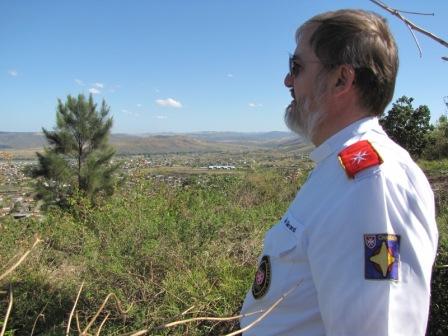
Father Gerhard’s goal is show us the human side life inside a global emergency,
an absolute catastrophe. Our route takes us through the slums that have sprung
up around the paper factory in the Industrial area of Isithebe, where about
50.000 people live, and into the Township of Sundumbili where the population is
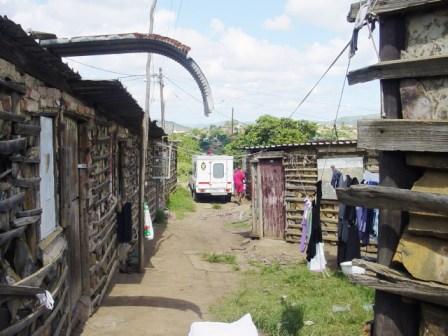
about 100.000. Here, I have to confront absolute poverty. The unpaved roads can
be passed only by jeep.
Thanks to new-comer Peter Wiedemann, who asked for donations to the Brotherhood
of Blessed Gerard in lieu of gifts for his 50th birthday, a new vehicle was
bought when donations from his friends and family were matched by Rotary Clubs
International. Since the work of the Brotherhood is carried out almost
exclusively through donations, they’re always grateful to those who remember
their fellow human beings.
“For 18 years, we always had to take the shortest, quickest route possible
through an area riddled with criminals and danger. The car was always locked,
the windows were always closed;” Father Gerhard says. Today, we leave both doors
unlocked, the windows are always wide open.
“Please, photograph everything. Photograph as much as you can,” my brother tells
me. “We have to show other people just how extreme the poverty here really is.”
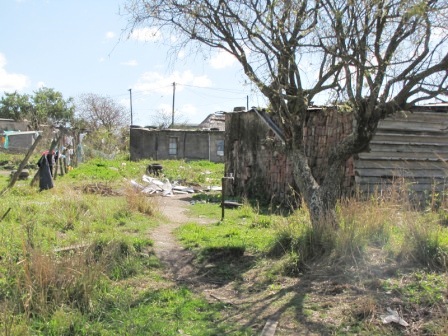
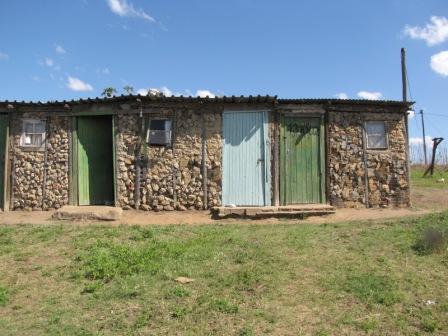
I photograph the little houses and cottages built by greedy business concerns
for the factory workers. The workers have just six square meters of living
space and have to pay huge rents for this miserable space. They are built like
row houses, one right into the other. There is no running water. It all has to
be carried a long way home in large canisters. There are mountains of garbage
everywhere. Between the piles of waste; chickens, goats and children compete for
room to move.
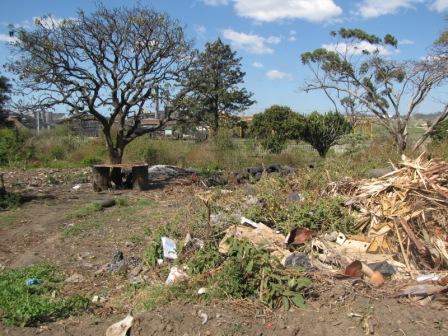
The "butchery"
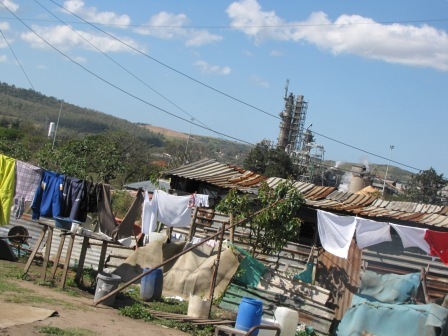
Laundry and plastic water barrels
I cannot describe the place where animals are slaughtered. Hygiene is
non-existent. It’s a place where diseases find their ideal breeding-ground.
Corrugated iron, tin, barbed wire, old tires, plastic sheets and pieces of
firewood are among the most common building materials. About 30% of the children
don’t go to school because their families simply can’t afford to pay the school
fees.
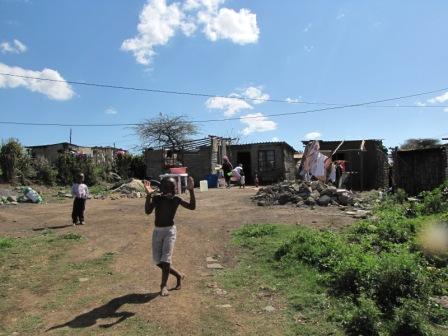
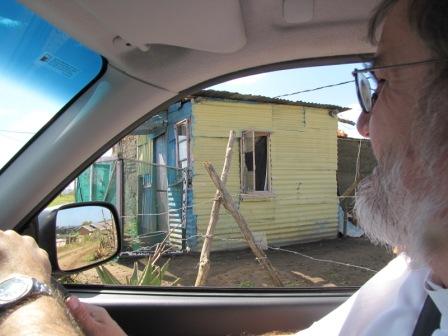
As we drive by, people run out of the cottages to see us. They always wave and
call out: “Baba, Baba Gerard!“
The children jump for joy and the adults laugh at them. Many of them know my
brother from visits to the hospice where they, or their relatives, have stayed
for treatment.
Yes, a lot has changed over the past 18 years! Everyone knows the Brotherhood’s
vehicle. It brings help, though food deliveries, directly into the township to
those who cannot work because they are sick. They also know the Brotherhood
through the sewing school through which many women have been trained to work as
seamstresses and some even have sewing schools of their own. They also know
that it brings medicine to the sick and scholarships to children who otherwise
could not attend school. These people are learning that education is the way to
break the cycle of poverty. Those who go to school find good jobs, those who
find good jobs earn good money, those who earn good money can afford to move
away from the slums. Those of us who live in Western Democracies don’t have to
pay school fees. We should be more grateful for the rich educational
opportunities that we have.
My brother points out one of the cottages and explains how one of the children,
who now lives in Blessed Gerard’s Children’s Home, had to be taken from there.
Put shortly, he was sick and being severely abused. Compassionate witnesses
called social services who contacted the Care Centre. Another child was
abandoned so soon after birth that the placenta was still attached, was found in
a garbage heap. An aide who works with the Brotherhood bundled him up and
brought him to the children’s home. I have met this particular child in the
children’s home. He hugged me and looked at me with smiling eyes. I would never
have guessed that his life’s story had such a sad beginning.
I am having flash backs: Picures that I have seen keep coming back to my mind,
situations I have been part of, a reality that I touched with my hands and that
touched my heart in turn.
This page is part of the Newsletter No. 29
of the Brotherhood of Blessed Gérard


Back to the homepage of the Brotherhood of Blessed
Gérard

This page was last updated on
Tuesday, 15 January 2013 12:50:18